
Antimalarial Tablets Explained: A UK Traveller’s Guide
Medically reviewed by Muhammad Adnan, Superintendent Pharmacist (GPhC reg. 2073652) · Reviewed 2026-05-31
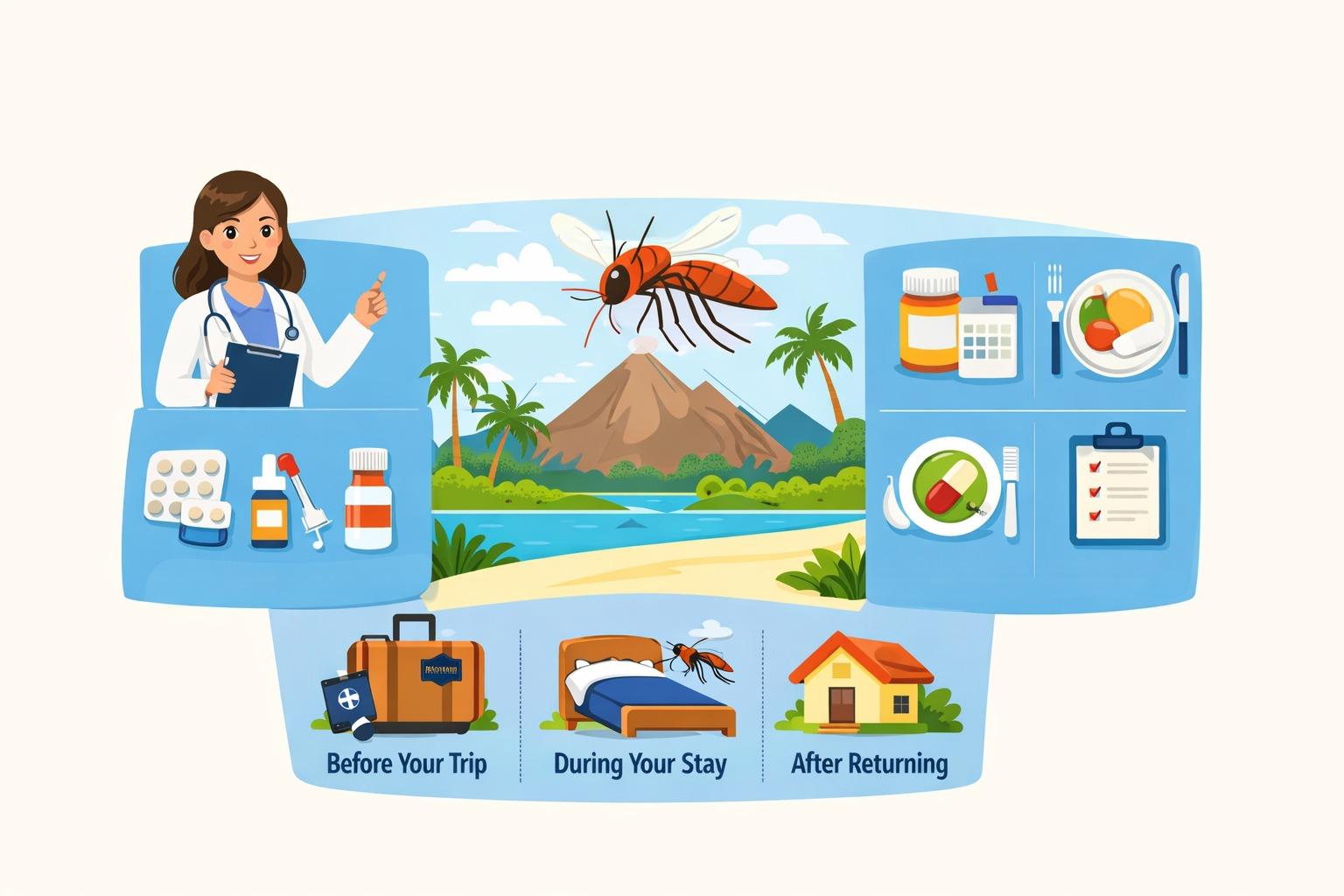
Antimalarial tablets don't make you immune to malaria; they stop the parasite establishing itself in your blood after an infected mosquito bites you. No single tablet is right for everyone, so the best choice depends on exactly where you're going and your own health and medicines.
If you're planning a trip from Altrincham, Timperley or anywhere across Trafford and South Manchester, here's how the main options actually work, and what we'll talk through with you before you fly.
How do malaria tablets actually work?
Malaria is caused by a parasite carried by certain mosquitoes that bite mainly between dusk and dawn. Once you're bitten, the parasite heads to your liver and then your bloodstream, and that's where it makes you ill.
Preventive tablets, known as chemoprophylaxis, keep a working level of medicine in your body so the parasite is killed off before it can take hold. That's why the timing matters so much: a tablet you take for a week after you're home is still doing a job, mopping up anything that emerged from the liver late.
Crucially, no antimalarial is 100% effective. Tablets sit alongside bite prevention, not instead of it.
What are the main UK options?
Four medicines do most of the work in UK travel clinics, and the right one is matched to your destination and your medical history.
- Atovaquone with proguanil (Malarone, or the pharmacy version Maloff Protect). A daily tablet, generally very well tolerated. You start one to two days before you enter the risk area and stop just seven days after you leave, which makes it ideal for shorter trips and last-minute travel. According to NHS Fit for Travel, the adult dose is one tablet daily.
- Doxycycline. An inexpensive daily antibiotic that also protects against malaria. You begin one to two days before travel and, importantly, continue for four weeks after you get back. It can increase sun sensitivity, so a good sunscreen matters, and it isn't suitable in pregnancy or for young children.
- Mefloquine (Lariam). A once-weekly tablet, which some people prefer for long stays. It needs to be started further ahead, usually two to three weeks before, partly so we can check you tolerate it, and continued for four weeks after return. It isn't suitable for people with a history of depression, anxiety, psychiatric illness or epilepsy.
- Chloroquine. Once a mainstay, now rarely used alone because resistance is widespread across most malaria areas. It still has a limited role for a few specific destinations and parasite types.
How long before and after travel do I take them?
This trips a lot of people up, so it's worth being precise. The "after" part is just as important as the "before."
- Malarone / Maloff Protect: start 1–2 days before, finish 7 days after leaving.
- Doxycycline: start 1–2 days before, finish 4 weeks after leaving.
- Mefloquine: start about 2–3 weeks before, finish 4 weeks after leaving.
Stopping early is one of the most common reasons prophylaxis fails, because the parasite can still surface from the liver in the weeks after you're home. Set a phone reminder and finish the full course even once you're back in Manchester and the holiday feels like a distant memory.
Which tablet is right for me?
There's no universally "best" antimalarial. The choice comes down to a few practical things we weigh up together:
- Where you're going. Resistance patterns differ by country and region, so a tablet that's fine for one destination may be useless for another. NaTHNaC's TravelHealthPro gives country-specific malaria advice that we check for your exact itinerary.
- How long you're away, and whether a daily or weekly tablet suits your routine.
- Your health and medicines, including pregnancy, mental health history, liver or kidney conditions, and anything else on your repeat prescription.
- Cost and tolerance, since the options vary in price and side-effect profile.
This is exactly the kind of tailored decision a consultation is for. You can see the full picture and book on our malaria prevention page, and browse other travel vaccines you might need for the same trip.
Don't skip bite avoidance
Tablets reduce your risk substantially, but stopping the bites in the first place is your first line of defence, and it's free. The NHS advises:
- Use insect repellent containing 50% DEET on exposed skin, reapplying as directed.
- Cover up with long sleeves and trousers in the evening, when these mosquitoes feed.
- Sleep under an insecticide-treated mosquito net if your room isn't properly screened or air-conditioned.
These steps also protect against other mosquito-borne illnesses such as dengue, for which there's no tablet at all.
Fever after travel is a medical emergency
This is the single most important thing to remember. If you develop a fever, or flu-like symptoms such as chills, headache and aching, from about a week after you could have been exposed and up to a year after returning, treat it as urgent. Malaria can become life-threatening within hours.
Seek medical help the same day, contact NHS 111 or your GP, or go to A&E, and tell them clearly that you've been in a malaria area. Don't assume it's a cold or jet lag. Prompt diagnosis and treatment is what keeps malaria a treatable illness rather than a dangerous one.
FAQs
Can I just buy malaria tablets over the counter?
Atovaquone/proguanil (Maloff Protect) can be sold from a pharmacy after a short assessment, but which medicine you actually need depends on your destination and health. A quick consultation makes sure you're not paying for a tablet that won't protect you where you're going.
Are antimalarials safe in pregnancy or for children?
Some are and some aren't. Doxycycline isn't suitable in pregnancy or for young children, while other options can be used with the right dose by weight. This always needs individual advice rather than a general rule.
I've left it late. Is it too late to get protected?
Not necessarily. Malarone can be started just one to two days before you travel, so even short notice is workable. We see plenty of same-day and walk-in travellers, so it's worth asking.
Plan it with a pharmacist
We're a GPhC-registered pharmacy and a registered Yellow Fever centre on Stockport Road in Timperley, open until 9pm Monday to Saturday and on Sundays too, with walk-ins and same-day appointments welcome. If you've got a trip coming up, book a travel consultation and we'll match the right antimalarial to your destination and check off any other vaccines you need in one visit.
Planning this trip?
Book a travel health appointment in Timperley, or see our full travel-vaccine price list.