
Route guide
Backpacking South America: vaccines for the whole overland route
Cartagena to Rio, the Amazon to the altiplano: the risks change at every border and every climb. Our Timperley clinic near Altrincham maps them to your route and issues yellow fever certificates on the day.
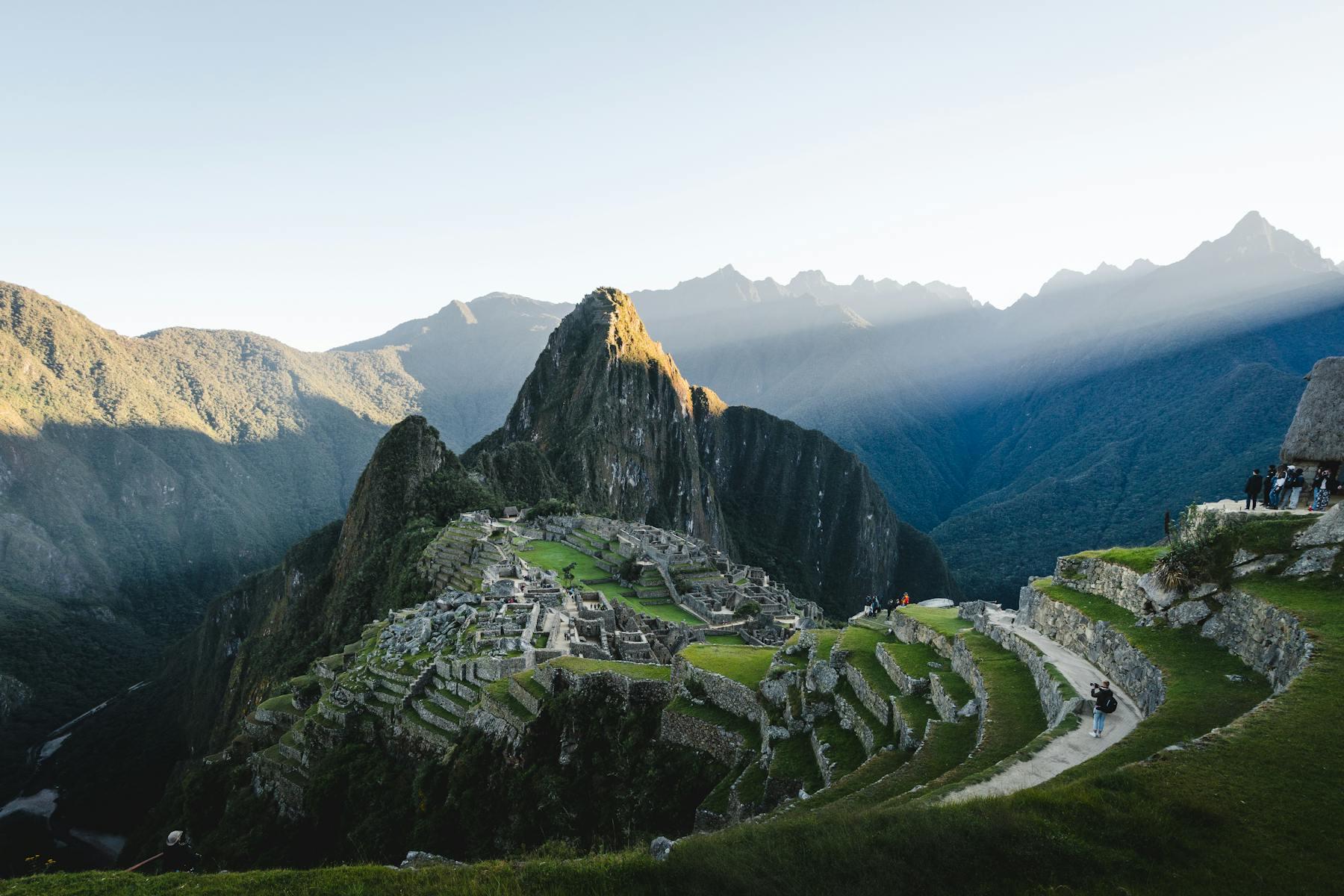
The route, stage by stage
What vaccines do you need to backpack across South America?
For the classic overland route down the Andes and across to Brazil, most backpackers need hepatitis A, typhoid and an up-to-date tetanus booster, plus yellow fever for the Amazon basin and most of Brazil, and often rabies for long trips or jungle lodges. Antimalarial tablets only come up for specific lowland Amazon stretches; altitude, not mosquitoes, is the bigger issue in Cusco, La Paz and on the salt flats.
The longer answer depends on the order you travel in, because South America is several health zones stitched together. A loop from Colombia through Ecuador, Peru and Bolivia, on to Chile or Argentina and finishing in Brazil crosses yellow fever country, drops into malaria zones and out again, and climbs above 3,000 metres more than once. This page walks that route in order, grounded in TravelHealthPro and NHS advice from the pharmacists at Altrincham Travel Clinic in Timperley; your own plan is agreed at your consultation.
Timing a long trip
Which courses need weeks, and which can wait until the week before?
Yellow fever is a single dose, but the certificate is not valid until ten days later: your first fixed deadline. Rabies is three doses over three to four weeks, hepatitis B usually runs over months with a shorter option if time is tight, and chikungunya is a single dose, but the two UK vaccines have different age limits and restrictions, so it is worth raising early rather than in the last week. Hepatitis A and typhoid are single injections that still work close to departure, so start the long courses first.
On cost, yellow fever is £75 including the ICVP, rabies £75 per dose, hepatitis A £50 and typhoid £35: a few hundred pounds against a trip that costs thousands. We are open until 9pm Monday to Saturday and 6pm on Sunday in Timperley, with free parking and walk-ins welcome.
Likely on your list
Which vaccines come up on a Colombia-to-Brazil trip?
Hepatitis A, tetanus and typhoid are the most-travellers vaccines for nearly every country on the route; the rest depend on your stops, your stays and how far off-road you go.
Yellow Fever
Required / recommended for risk zones
Advised for the Amazon lowlands, Iguazu Falls and most of Brazil including Rio; not above 2,300 metres or on the Inca Trail.
Hepatitis A
Recommended for most
Listed for most travellers at every stop bar Chile. Spread through food, water and close contact, so hostel kitchens count as much as jungle treks.
Typhoid
Recommended for most
Food- and water-borne and listed for most travellers in Colombia, Peru, Bolivia and Brazil; the more rural the trip, the stronger the case.
Tetanus, Diphtheria & Polio
Booster
Cuts and grazes come with trekking and hostel life. A combined booster is due if your last dose was over ten years ago.
Hepatitis B
Longer trips
Spread through blood and body fluids. Consider it for six-month trips, volunteering, contact sports and possible medical or dental treatment abroad.
Rabies
Risk-dependent
Dogs carry rabies across most of the continent, and bats are an important source of infection too. Discuss it for Amazon lodges and trips over a month.
Chikungunya
Newer vaccine — ask us
Present across the tropical lowlands. Two vaccines are available in the UK: one licensed from 12 years, the other only for adults aged 18 to 59 and not for people with certain long-term conditions. Which, if either, suits you is decided at your consultation.
Cholera
Basic conditions
Rarely needed on the main route; considered for volunteering where sanitation is very poor or during an outbreak.
Yellow fever geography
Where on the route does yellow fever actually matter?
Yellow fever follows the Amazon basin through Colombia, Ecuador, Peru and Bolivia. The surprise is Brazil: TravelHealthPro now recommends vaccination for most of the country, including Rio, São Paulo, the south, Brasília and Iguazu Falls, leaving out only Fortaleza, Recife and a few unlisted areas; across the falls, Argentina’s Misiones and Corrientes provinces are included too. Above 2,300 metres it drops away: Lima, Bogotá, Quito, La Paz, Cusco city, Machu Picchu and the Inca Trail all sit outside the recommendation.
- Entry rule, not health advice: Bolivia requires a certificate from arrivals aged one and over from any country with a risk of yellow fever transmission, while Colombia and Ecuador require one only from a short named list — Angola, Brazil, DR Congo and Uganda for Colombia; Brazil, DR Congo and Uganda for Ecuador. Peru, Brazil, Argentina and Chile require none
- Those named lists also count airport transits of more than 12 hours, and Ecuador's temporary 2025 requirement for arrivals from Peru, Colombia and Bolivia was lifted on 28 August 2025
- One dose, valid from day ten for life; as a registered centre we hand you the ICVP at the appointment

Malaria zones
Do backpackers need malaria tablets anywhere on this route?
Only in specific lowland pockets, and even there TravelHealthPro rates the risk as low. The malaria mosquito does not live in the high Andes or Patagonia, so Cusco, La Paz, the salt flats, Santiago and all of Argentina are off the list. The areas to think about are the Peruvian Amazon around Iquitos, the Amazon lowlands of Bolivia and Ecuador, rural Colombia below 1,600 metres and the Brazilian Amazon including Manaus. For short visits the advice is awareness and bite avoidance; tablets are kept for longer rural stays and higher-risk travellers.
- No malaria: Lima, Cusco, Machu Picchu, La Paz, Uyuni, Chile, Argentina, Iguazu Falls, the Galápagos and Guayaquil; Rio and the Brazilian coast are very low risk
- Tablets start before you enter the zone and continue after you leave
- A fever within a year of getting home needs a same-day malaria test

Altitude
How do you acclimatise for Cusco, La Paz and the Uyuni salt flats?
Altitude catches more backpackers on this route than any infection. Cusco sits at 3,399 metres, La Paz at 3,630, and the Uyuni salt flats well above 3,500. Acute mountain sickness usually starts six to ten hours after arrival as a headache with nausea, tiredness or poor sleep, and fitness offers no protection. Arriving slowly is the best defence: coming up overland through Arequipa gives your body steps; a flight from Lima to Cusco does not. Prescription altitude-sickness medication can help with unavoidable fast ascents but never replaces acclimatisation, and suitability is decided at your consultation.
- Above 3,000m: sleeping height up by no more than 500m a day, with a rest day every three to four days
- Mild symptoms: stop climbing, rest at the same height, plain painkillers; most settle in one to three days
- Confusion, an unsteady walk, breathlessness at rest or a wet cough are emergencies: descend and get help
Rabies
Is the rabies vaccine worth it for hostels and Amazon lodges?
For a multi-month trip, usually yes. Rabies is reported in domestic animals in every country on the route bar Chile, where TravelHealthPro says it has only been reported in wild animals, and its rabies factsheet notes that bat rabies now accounts for the majority of human rabies cases in the Americas. That matters in Amazon lodges and among the street dogs of Andean towns and beach hostels, and any bat found in the room of a sleeping person counts as a potential contact. The pre-travel course is three doses over three to four weeks. It does not let you skip treatment after a bite, but it cuts the follow-up doses and in most circumstances removes the need for rabies immunoglobulin, which is often impossible to find in remote areas.
- Bitten, scratched or licked on broken skin: flush under running water for several minutes, wash with soap, then get urgent medical help even if fully vaccinated
- Highest value for stays over a month, Amazon lodges, caving, cycling and volunteering with animals
- A shorter schedule exists if you are leaving soon; keep the dose record with your passport
Border by border
How does the health picture change as you move south and east?
The classic route in travelling order; each country card links to its full guide.
Colombia
Yellow fever is recommended below 2,300m except Bogotá, Cartagena, Medellín, Cali and Barranquilla, so the Lost City trek, Tayrona and Leticia are in. Malaria is low risk only in rural areas below 1,600m; Bogotá at 2,644m is your first altitude.
Ecuador
Quito at 2,819m and the Galápagos are outside the yellow fever zone; the Amazon provinces east of the Andes are inside it. Malaria is confined to mainland areas below 1,500m. Arrivals from Brazil need a certificate.
Peru
Lima, Cusco, Machu Picchu and the Inca Trail carry no yellow fever or malaria risk; the lowlands of Loreto and Madre de Dios carry both, with malaria low risk. No certificate at the border.
Bolivia
La Paz, Sucre and the altiplano sit above the yellow fever and malaria lines; Beni, Pando and Santa Cruz sit below them. Certificates are checked on arrivals from risk countries, including Peru and Brazil. Uyuni tours run above 3,500m for days.
Chile and Argentina
The calm stretch: no yellow fever risk in Chile, no certificate for Argentina, no malaria in either. Exceptions: Argentina's side of Iguazu Falls is inside the yellow fever recommendation, and the Atacama and Andean passes are high enough for altitude sickness.
Brazil
The yellow fever recommendation covers most of the country, Rio and São Paulo included. Malaria is low risk in the Amazon basin only, very low elsewhere and absent at Iguaçu. Dengue seasons are large; pack daytime repellent.
Dengue, Zika and chikungunya
All three circulate in the lowlands of every country bar Chile, spread by day-biting mosquitoes, so repellent at breakfast matters. There is no Zika vaccine, and the NHS advice is to consider avoiding travel to areas where Zika is found if you are pregnant or planning a pregnancy — speak to us before you commit to the lowlands. The dengue vaccine is considered mainly for people who have had dengue in the past; only exceptionally is it considered for anyone else, and then with specialist advice. A chikungunya vaccine is available from age 12, with a second adult-only option that carries safety restrictions. All of them are assessed individually at your consultation. If a fever abroad turns into severe tummy pain, repeated vomiting, bleeding gums or blood in your vomit, get medical help the same day — those are the warning signs of severe dengue.
Eating on the road
Typhoid and hepatitis A travel in food and water. Hot, freshly cooked plates, sealed or treated water and fruit you peel yourself do most of the work; raw seafood and unwashed salads are the usual culprits.
FAQ
Backpacking South America: your questions answered
Planning the Colombia-to-Brazil loop?
Bring your rough route to Altrincham Travel Clinic in Timperley and we will match vaccines, malaria and altitude advice to the order you travel in, with yellow fever certificates issued on the day.