
Travel Vaccines in South Manchester: A Step-by-Step Plan
Medically reviewed by Muhammad Adnan, Superintendent Pharmacist (GPhC reg. 2073652) · Reviewed 2026-05-31
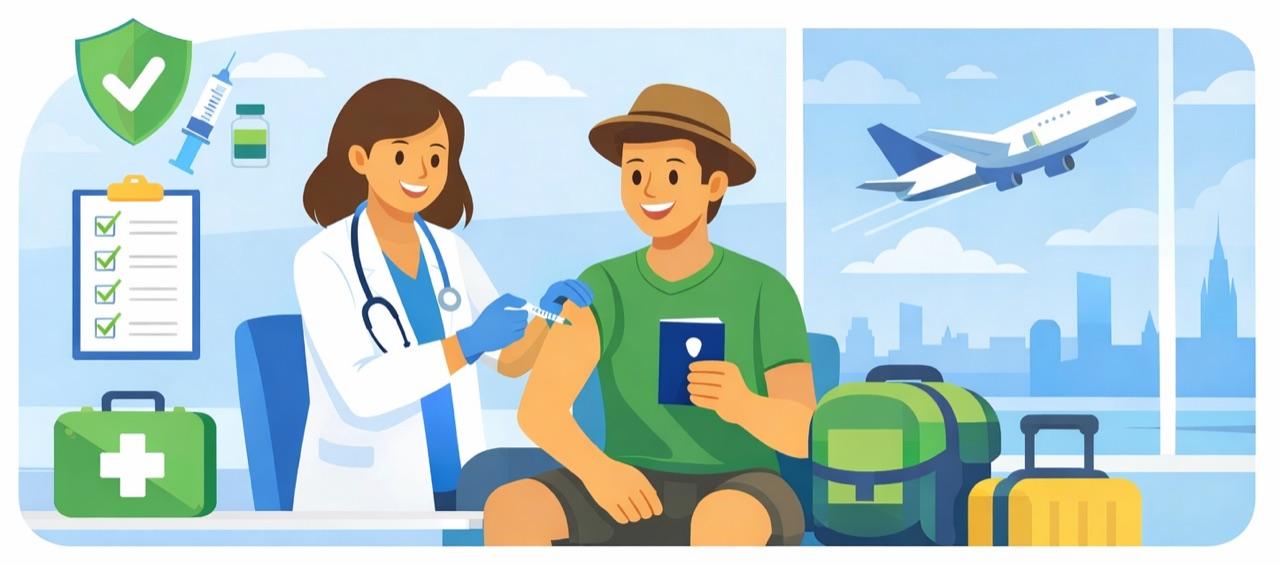
If your household is in Didsbury, Chorlton, Sale, Stretford or Wythenshawe and a long-haul trip has just gone in the diary, start about eight weeks before the flight: read up on the destination, then book one appointment covering everyone going. Here is the whole process as we run it in Timperley, from that first bit of homework to the week after you land back at Manchester Airport.
When should a South Manchester household start planning?
Eight weeks is the comfortable number to aim at. The NHS advises seeking travel health advice at least four to six weeks before you travel, because some vaccines come as a course and others need time to take effect. The extra fortnight is simply breathing room, so a second dose can be fitted around half term, a work trip or a weekend away.
Before you book, give the destination ten minutes. Our country-by-country travel vaccine guides set out what is usually advised where you are heading, which regions carry more risk, and whether an entry certificate rule applies. Screenshot what you find and bring it; the appointment gets quicker and far more precise.
Getting here is the straightforward part. Stretford, Sale and Brooklands sit on the Altrincham Metrolink line, and so do we: Timperley is your stop, with the clinic a short way along Stockport Road. Chorlton, Didsbury and Wythenshawe are on the Airport line instead, so most households there drive across, usually around twenty minutes depending on traffic, and park free outside the door.
What happens in the consultation, and what should I bring?
A pre-travel appointment is a risk assessment that happens to finish with injections, rather than the other way round. Expect questions about:
- The exact regions and towns, not just the country. Risk can change sharply inside one border.
- Your dates and the shape of the trip: resort, backpacking, visiting family, volunteering, business.
- Where you will sleep and eat, from air-conditioned hotels to hostels, homestays and tents.
- Activities: trekking, freshwater swimming, night-time road travel, any contact with animals.
- Your health: long-term conditions, pregnancy or plans for it, allergies, and anything affecting your immune system.
Three things make the visit run smoothly: a rough itinerary, whatever vaccination records you can lay hands on (the NHS App, a GP printout, a child's red book), and a list of every medicine you take, including anything bought over the counter. If a yellow fever certificate is likely, bring your passport too, because the certificate is written to match it.
Cannot find your records? Come anyway. We work from what you remember and err towards caution.
How do you decide which vaccines I actually need?
We work in three layers, always in this order.
Routine UK immunisations first. The NHS asks every traveller, children included, to be up to date with standard vaccinations such as measles before going abroad. Sorting a lapsed booster is often the most valuable thing we do in the whole appointment, and it is easily overlooked when your mind is on the destination.
Destination protection next. This covers illnesses linked to food, water and local conditions, and it is where the country guidance does the heavy lifting.
Activity and duration last. A fortnight in a city is a different proposition from three months upcountry. Longer rural stays, cycling and hiking trips, and work around animals are what bring rabies protection and, in parts of rural Asia, Japanese encephalitis into the conversation. One thing to carry with you either way: if an animal bites, scratches or licks broken skin while you are away, flush the wound under a running tap for several minutes, wash it thoroughly with soap and water, and get medical help locally the same day; that still applies in full even if you have had the pre-travel course, because further doses are needed.
Two neighbours on the same flight can genuinely leave with different lists. That is the system working, not a mistake.
Which vaccines need weeks, and which can I have the same day?
Some travel vaccines are a single injection we can give while you are in the room. Others are a course needing days or weeks between doses, which is exactly why lead time matters.
Yellow fever deserves its own note. The NHS says to be vaccinated at least ten days before you travel so the vaccine has time to work, and that ten-day point is also when the certificate starts to count. Leave it later and a border can turn you away, so it sits near the top of the list wherever a certificate rule applies.
If the flight is closer than you would like, do not write the trip off. Our guide to last-minute travel jabs is honest about what is realistic in the final fortnight.
How are malaria tablets chosen?
There is no travel vaccine for malaria, so protection rests on two things working together: the right antimalarial tablets and serious effort to avoid bites. Neither is enough alone.
Choosing tablets is a clinical decision, which is why you will not find brand names here. It turns on the region and season, how long you are away, your other medicines, your kidney and liver health, whether you are pregnant, and how you have got on with antimalarials before. Some need starting well ahead of departure, and all continue for a set period after you get home: the NHS malaria guidance explains why finishing the course matters as much as starting it.
Bite avoidance is the half people skip. Repellent on exposed skin, applied after sunscreen. Long sleeves and trousers in the evening. A treated net if the room is not properly screened or cooled. Unglamorous, and it works.
What happens on the day, and how do certificates work?
Most people are in and out inside half an hour. Afterwards a sore arm for a couple of days is normal, and a mild temperature for a day or so is not unusual. Plenty of adults feel light-headed around an injection, so tell us if needles bother you, stay sitting for a few minutes and have a drink before you head back to the car.
If you need yellow fever, we are a registered Yellow Fever Vaccination Centre and issue the International Certificate of Vaccination or Prophylaxis on the day of your yellow fever vaccination. Since the 2016 change to the International Health Regulations a single dose is accepted for life, so for most travellers this is a one-off rather than a repeat every few years.
What does it cost, and what about children and older relatives?
We publish every price, so a household can budget before it walks in. Our travel vaccine price list shows the per-dose cost of everything we hold, and a multi-dose course is simply charged per dose. A handful of travel vaccines are free through your GP surgery, and if you have time for that route we will say so plainly.
Children and grandparents are welcome, and back-to-back family bookings save a second trip across Trafford. Age and health shape the assessment. For travellers over 60, yellow fever is a precaution rather than a flat refusal: it needs extra care and an individual risk discussion. Some people cannot have that vaccine at all, including babies under six months and anyone whose immune system is weakened, and in pregnancy or for babies aged six to nine months it is only considered when travel to a high-risk area is unavoidable and expert advice supports it. Where a vaccine is off the table we say so plainly and build the plan around the rest of the list.
Frequently asked questions
Can the whole family be seen in one appointment?
Yes, and it is the sensible way to do it. We book households together so the itinerary is explained once, the plan stays consistent across everyone travelling, and the school run is disrupted once. Evening and Sunday slots exist for exactly this.
I am flying in ten days. Is it still worth coming in?
Almost always. Several vaccines still give worthwhile protection at short notice, antimalarial tablets can often be started close to departure, and bite, food and water advice costs nothing but attention. We will tell you straight what is still useful and what has run out of time.
What should I do if I feel unwell after I get home?
Take a fever seriously. If you have been somewhere with malaria and develop a temperature, on the flight home to Manchester or months afterwards, seek medical help urgently and say where you have travelled. Persistent diarrhoea or an unexplained rash also needs looking at rather than waiting out. An animal bite, scratch or lick on broken skin that was not treated abroad is more urgent again: ring NHS 111 or your GP today, and read our guidance on rabies treatment after an animal bite abroad — that course is arranged through the NHS rather than in a pre-travel appointment.
Do I have to bring my vaccination records?
They help, but they are not a condition of being seen. If your history is unclear we plan cautiously, which occasionally means a dose you may not strictly have needed. Most people find something useful in the NHS App before they set off.
Trip booked and not sure where to start? Book a travel consultation or ring 0161 948 5066, and we will map the whole plan out, dates included, in one visit at 250 Stockport Road in Timperley.
Sources: NHS travel vaccination advice, NHS yellow fever vaccination, NHS malaria, NHS: why vaccination is safe and important.
Planning this trip?
Book a travel health appointment in Timperley, or see our full travel-vaccine price list.