
Southern Africa destination guide
Zimbabwe travel vaccines and malaria advice
The Falls, a Hwange lodge, a Mana Pools canoe trail or a Kariba houseboat? Here is what to sort out before you fly, and where the malaria risk really sits.

Straight answer
Which vaccines and malaria tablets do you need for Zimbabwe?
For almost every trip to Zimbabwe you will want Hepatitis A, Typhoid and an up-to-date Tetanus, Diphtheria and Polio booster, and if your route touches Victoria Falls, Hwange, Kariba or the Zambezi valley you will also need antimalarial tablets. Rabies deserves serious thought for the remote parks, Hepatitis B for longer stays. Yellow Fever is not a health risk in Zimbabwe; it is only a paperwork question if you arrive from a country where the disease circulates.
What sets Zimbabwe apart from its neighbours is the shape of the land: a high plateau with a hot, low-lying rim. Harare and Bulawayo sit on the plateau and are very low malaria risk, while the Falls, Hwange, Lake Kariba and Mana Pools all drop into the risk zone, where tablets are the usual advice and the risk peaks between November and June.
Water is the other thread. TravelHealthPro lists cholera, typhoid and hepatitis A among Zimbabwe's risks, and all three travel the same route: contaminated food and water. That is why Hepatitis A and Typhoid sit at the top of the list, and why Zambezi canoe or houseboat days need a word about bilharzia. Everything here follows TravelHealthPro guidance and is tailored to you at our Timperley clinic near Altrincham.
Timing for Zimbabwe
Give the rabies course three to four weeks, and start tablets before the Zambezi
If rabies is on your list, and for Hwange or Mana Pools it usually is, the standard course is three doses over three to four weeks; a shorter schedule exists for late bookers and we confirm whether it suits you. Antimalarial tablets start a few days or weeks before travel, depending on the tablet, and continue after you get back. Yellow Fever only matters if you fly in from a risk country; a first-ever certificate becomes valid ten days after the jab, then lasts for life.
Travelling next week? Come anyway: Hepatitis A and Typhoid can be given at the same visit and tablets can begin straight away.
What is usually advised
The Zimbabwe vaccine list, grouped by who needs each one
These tiers mirror the current TravelHealthPro recommendations for Zimbabwe. 'Some travellers' depends on where you sleep, how long you stay and what you get up to; we confirm your own list in one appointment.
Hepatitis A
Most travellers
Food- and water-borne, and TravelHealthPro lists it among Zimbabwe's risks alongside typhoid and cholera. One dose covers the trip; a second later gives long-term protection.
Typhoid
Most travellers
TravelHealthPro recommends typhoid vaccine for most travellers to Zimbabwe, and food and water hygiene varies widely, so it is a sensible baseline even on an upmarket safari.
Tetanus, Diphtheria & Polio
Most travellers
One combined booster if your last dose was over ten years ago. Cuts and scrapes come with walking safaris and canoe trails.
Hepatitis B
Some travellers
Considered for stays of a month or more, volunteering, healthcare placements, or where treatment in a Zimbabwean clinic is a realistic possibility.
Rabies
Some travellers
Often advised for Hwange, Mana Pools and other remote areas where treatment is hours away. Falsified rabies vaccine was reported in Zimbabwe in January 2025.
Cholera
Some travellers
Only for aid or health work, or an outbreak area with poor access to safe water and medical care. On a typical safari, water and food discipline is the protection.
Dengue
Some travellers
Present in Zimbabwe, spread by day-biting mosquitoes. The vaccine is only considered from age 4 after a previous laboratory-confirmed dengue infection.
Measles (MMR)
Some travellers
Check you have had two doses. Infants from six months mixing closely with local families may be offered an early dose.
Tuberculosis
Some travellers
Rarely needed for a holiday. BCG comes up for children under 16 staying three months or more and for healthcare workers.
Entry rules — separate from your jabs
Yellow fever certificate: what Zimbabwe requires
A yellow fever certificate requirement is a legal condition of entry — it is not the same thing as the vaccine being recommended for your health. The recommendation (when there is one) appears in the vaccine list above; the entry rule is below.
Flying direct from the UK? No yellow fever certificate needed for Zimbabwe
Zimbabwe only asks for a certificate (ICVP) from travellers aged 9 months+ who arrive from — or pass through — a country with yellow fever risk, and airport layovers over 12 hours in a risk country count. That catches out multi-country itineraries, so check your whole route, not just your destination.
There is no yellow fever transmission risk in Zimbabwe itself — this rule exists purely to stop the virus being carried in from elsewhere.
Malaria by region
Where in Zimbabwe do you actually need malaria tablets?
Zimbabwe's malaria map follows its altitude, and for most itineraries the honest answer is that you will be taking tablets. TravelHealthPro puts risk in the Zambezi valley in every month of the year, rates the rest of the country below 1,200 metres as high risk from November to June and low risk from July to October, and calls Harare and Bulawayo very low risk. The guidance stops at those bands. It names no town or lodge, so anyone who tells you precisely which band Victoria Falls belongs in is interpreting rather than quoting. The Falls stand on the Zambezi below that 1,200-metre line, Hwange, Kariba and Mana Pools share the same low, hot country, and TravelHealthPro is clear that the final call on tablets rests with your travel health adviser and you after an individual risk assessment. Ours, for a Falls-and-safari trip, is tablets whichever month you fly.
- Zambezi valley, including Kariba, Chirundu and the Mana Pools floodplain: TravelHealthPro puts risk in every month, so tablets all year
- Victoria Falls: the guidance names no town, and the Falls stand on the Zambezi below 1,200 m, so we treat a Falls trip as a tablets trip and confirm it with you
- Hwange and other areas below 1,200 m: high risk November to June and tablets advised; July to October is rated low risk, where bite avoidance may be enough and tablets become an individual decision
- Harare, Bulawayo and the high plateau: very low risk, where awareness of the risk and bite avoidance are the advice
- No malaria vaccine exists for travellers: tablets plus bite avoidance is the protection
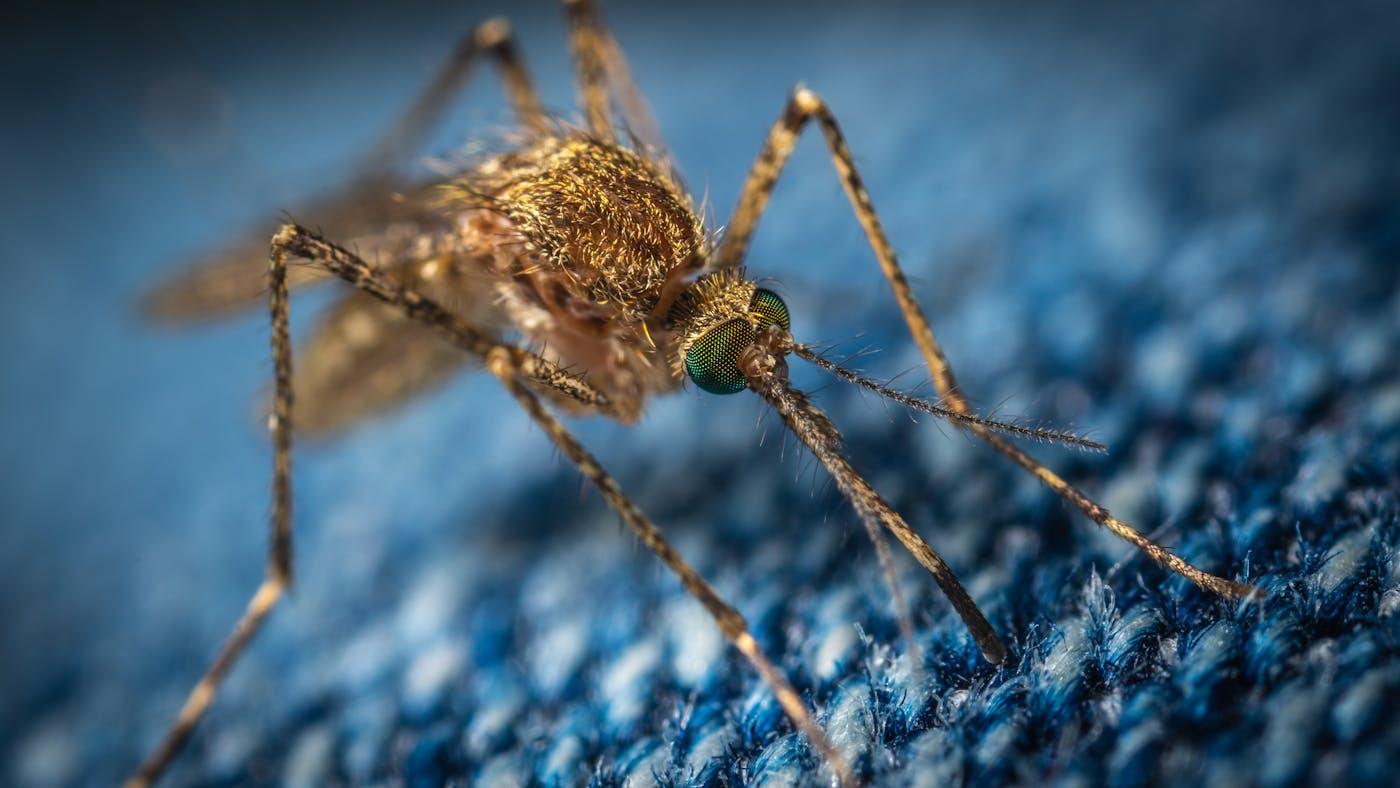
- A fever of 38°C or above more than a week after you have been in a malaria area, or any malaria-like symptoms within a year of getting home, needs urgent medical assessment: tell them you have been to Zimbabwe
Water, food and the Zambezi
Is the water safe in Zimbabwe, and what about bilharzia on Kariba and the Zambezi?
Treat tap water as unsafe unless your lodge says otherwise. TravelHealthPro lists cholera among Zimbabwe's risks but rates it low for most travellers, and keeps the vaccine for aid workers and for people going into outbreak areas with limited access to safe water and medical care. Hepatitis A and Typhoid cover the vaccine-preventable infections in that group; for cholera itself, bottled or boiled water, cooked food and clean hands protect ordinary tourists. Fresh water is separate: the Zambezi and Lake Kariba carry schistosomiasis, or bilharzia, a parasite that enters through the skin while you swim, wade or paddle.
- Drink bottled or boiled water, skip the ice, and brush your teeth with it too
- The cholera vaccine is reserved for aid work or outbreak areas with poor access to safe water
- Stay out of the Zambezi and Lake Kariba; chlorinated pools are fine, and screening is worth arranging 8 to 12 weeks after freshwater contact
Rabies and remote parks
Why does rabies matter more on a Zimbabwe safari than on a city break?
Rabies is present in Zimbabwe, carried mostly by dogs but also by bats and other mammals, and it is almost always fatal once symptoms begin. What tips the balance on safari is distance. Hwange's camps, the Mana Pools floodplain and the Kariba shoreline are hours from a hospital, and the immunoglobulin an unvaccinated person needs after a bite is in short supply across most of Africa. With a pre-travel course of three injections you still need urgent treatment after a bite, but only two further doses and no immunoglobulin.
- Three intramuscular doses over three to four weeks; a shorter schedule can be discussed for last-minute trips
- After any bite, scratch or lick: rinse for several minutes, wash with soap and water, then get urgent medical help even if vaccinated
- Falsified rabies vaccine was reported in Zimbabwe in January 2025, so ask to see the packaging of any dose given there

Plan the rest of the trip
Useful next reads for Zimbabwe
Most Falls trips cross a border or two. These pages cover what usually comes up next.
Yellow Fever certificate checker
Arriving via Kenya, Uganda or Angola? Check whether Zimbabwe will ask for your ICVP.
Zambia and the Livingstone side of the Falls
Crossing the bridge changes the malaria picture: Zambia is rated high risk countrywide.
Mosquito bite protection
Repellent strength, treated nets and what to wear at dusk on the Zambezi.
FAQ
Questions people ask us about Zimbabwe
Sorting Zimbabwe from Timperley
Our pharmacy at 250 Stockport Road is two Metrolink stops from Altrincham, with free parking outside. One appointment covers vaccines, a Yellow Fever certificate if your route needs it, antimalarial tablets and a rabies plan for the parks, seven days a week.